
Unemployment Rate Lower in Maui County

Unemployment rate lower in county

March 8, 2011
Article from: The Maui News

The unemployment rate for Maui County fell one percentage point in January from the same month a year ago to 7.9 percent, the state Department of Labor and Industrial Relations reported Monday.

That jobless rate for January was higher than the state’s 6.4 percent (not seasonally adjusted) but the best for the Neighbor Islands. Kauai logged an unemployment rate of 8.5 percent and the Big Island 9.3 percent. Oahu’s jobless rate was 5.4 percent.

The national unemployment rate for January (not seasonally adjusted) was 9.8 percent.

By island in the county, Lanai had the lowest rate of joblessness, at 5.3 percent, down from 8.7 percent in January 2010, followed by Maui island at 7.9 percent, down from 8.6 percent, and Molokai at 12 percent, down from 15.5 percent.

Unemployment rates in December were higher on Lanai (6 percent) and Molokai (12.7 percent) but lower on Maui island (7.3 percent). The Maui increase was likely due to an end in holiday employment, said Kevin Kimizuka, Maui County branch manager of the labor department’s Workforce Development Division, on Monday morning.

Anecdotally, Kimizuka said that his division has seen more jobs for part-time work and at the entry level, such as salesclerks, receptionists and warehouse laborers. However, the more career-oriented and managerial-level jobs are not opening up. Most opportunities are temporary in this sector, he said.

He added that his division is seeing fewer people seeking unemployment claims.

Looking at the different sectors statewide, the biggest gain came in trade, transportation and utilities, which was up 2,100 jobs, the Labor Department reported. This comes on the heels of two straight months of declines. Retail trade posted a 2,300-job gain in the month.

Government (1,500) and leisure and hospitality (1,300) sectors also showed gains in the labor department report.

On the other side of the ledger, construction shed 1,000 jobs in January, after seeing three months of growth. All sectors fell, including residential construction and work for trade and framing contractors. From January 2010 to this January, 1,700 jobs were lost in construction.

There were 590,800 employed and 39,650 unemployed people in January, for a seasonally adjusted labor force of 630,450, the report said. Last January, the seasonally adjusted work force was 628,650.
Maui Search Updated to a NEW System

• We now have our own complete copy of the Maui MLS on our web server.
• It’s fast. Real Fast! No more waiting.
• Although our website looks like it did yesterday, the entire site has been re-programmed to work with the new system.

Other updates:

• You can now search by Neighborhood
            • You can search by neighborhood via a selection box or the type ahead/autocompletion method

• You can now search for vacation rentable condos via a simple checkbox
• You can search for condos via a selection box or the type ahead/autocompletion method
• Created a “Popular Subdivisions” section in main navigation menu
• Included several dozen new small features and design improvements
• We still have a few images that are not showing up. We expect to have this resolved within 24 hours.
• The Beach Cam page now has a map that shows the locations of everyone currently on our website.

Hawaii Hotels Continuing Positive Trend For 14th Consecutive Month

Hotels gain in key areas

By Allison Schaefers
Article from: Star-Advertiser

Hawaii hotels began the year with increased occupancy, average daily room rates and revenue per available room, according to a report released today by hotel consultancy firm Hospitality Advisors LLC.

Statewide hotel occupancy rose 8.1 percentage points to 74.5 percent in January, the 14th consecutive month to post occupancy gains since recovery began in late 2009. Statewide, the average daily room rate, or ADR, increased 6.8 percent to $188.95, the largest price gain since March 2008.

These gains pushed revenue per available room, considered by many to be the best measure of hotel performance, up 19.9 percent to $140.77.

“We saw the momentum that began in the second half of 2010 continuing into this year,” said Joseph Toy, president and chief executive officer of Hospitality Advisors.

While most of Hawaii’s hotel recovery has been occupancy-driven, aggressive discounting has also strengthened statewide performance over the past three months, especially on Oahu and Maui, Toy said.

The return of the Pro Bowl helped as well, with arrivals gains from the state’s best markets — the U.S. West, the U.S. East, and Japan — he said.

“There’s a lot of pent-up demand for Hawaii, and hotels here are recovering faster than in other destinations,” Toy said.

Arrivals and spending are expected to go up this year for the U.S. West, the U.S. East, Japan, China, South Korea, Canada, Oceania and Europe, said David Uchiyama, vice president of brand management for the Hawaii Tourism Authority.

“We need to grow ADR, revPAR, airfares and ancillary spending while building experiential value,” Uchiyama told members of the state’s visitor industry during a marketing overview Wednesday.

Still, statewide occupancy and revenue per available room (revPAR) continued to trail pre-slump levels by a wide margin, Toy said. The best-ever occupancy for January was 86.7 percent in 2006, and the month’s best revPAR was $162.12 in 2008, he said.

Price recovery for Hawaii’s hotel industry is still another two or three years away, said Barry Wallace, executive vice president of hospitality services for Outrigger Enterprises.

“In the last few dollars of ADR lies almost all the profit,” Wallace said. “The vast majority of ADR pays for employees and taxes. Profit is the final dollar or two, and that’s the dollar that isn’t there. Many Hawaii hoteliers can’t pay the mortgage or are in some level of distress.”

As a result, hoteliers will continue to feel squeezed, and visitors will continue to get great deals, he said.

“We can’t pull back the specials because we are still using them to drive demand,” Wallace said. “We are all still very cautious.”

Hoteliers also are concerned that rising oil prices, the threat of hotel strikes and sprucing up for the Asia-Pacific Economic Cooperation conference, which will bring the leaders of 21 member economies to Hawaii in November, could further cut into burgeoning profits, he said.

If the price of oil, which recently topped $104 a barrel, continues to rise, it could cause the greatest damage to Hawaii’s fragile tourism recovery, Toy said.

“A strike would eventually be settled, but oil prices and how things play out in the Middle East could have a longer-term impact,” he said.

Labor concerns surfaced for hoteliers again last week after 97 percent of unionized workers at four Kyo-ya-owned hotels voted to authorize a strike, Wallace said.

“All the hotels are prepared to make reasonable wage adjustments, but the greater concern is that one way or another the argument will escalate and it will deter people from coming,” Wallace said. “Hawaii could be perceived as unfriendly.”

Contracts for some 6,600 unionized hotel workers expired last June, and workers already have held a five-day strike at Hilton Hawaiian Village Resort and Spa. Now the threat of another strike is coming to Hawaii’s hotel industry at a time when it needs to look its best.

“All eyes will be on Hawaii during APEC,” Wallace said.

Preparations for the two-day event are under way, he said.

“It’s expensive,” Wallace said. “Currently, hotels are ensuring that technology is up to snuff and people learn about language and culture.”

Rare Improved Kihei Commercial Lot Opportunity

HARD TO FIND IMPROVED KIHEI COMMERCIAL LOT

***MLS #343898***

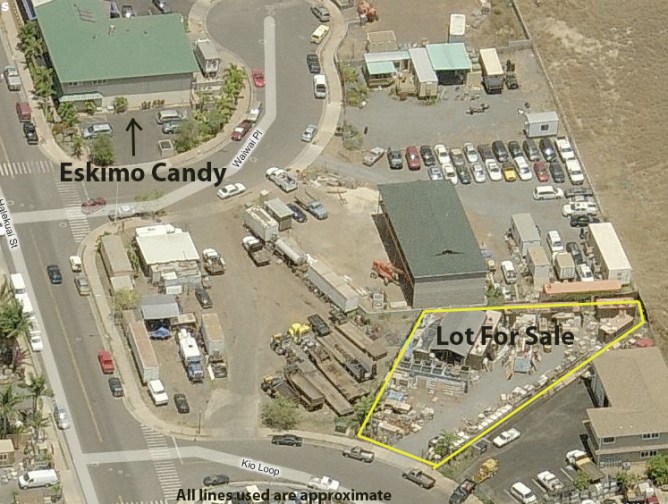
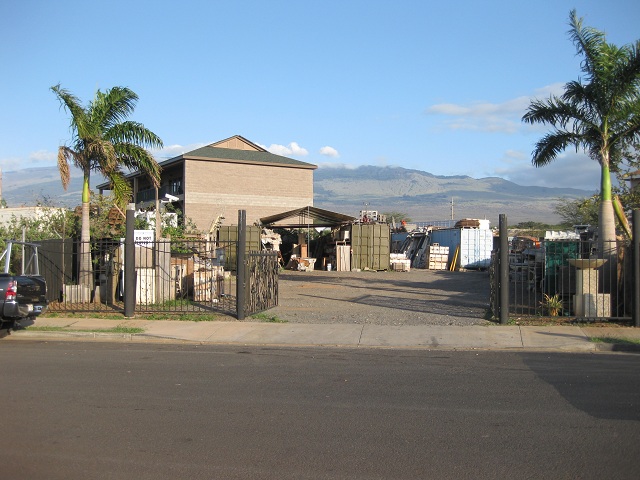
132 KIO LOOP

-11000+ sf fully graded, level, and fenced with ornate stainless steel entry gate commercial lot

-Utilities to site include telephone, tv cable, underground 220 electricity and County water

-B-2 Zoning

Aerial View of Lot

Lot

Priced to sell at $450,000

Call Clint Hansen at (808)280-2764 for more information or for a showing.

Hawaii Commercial Property Sales Surge

Commercial property sales surge

Investors spent about $1.5 billion last year on real estate ranging from retail to hotels

By Andrew Gomes
Article from: Star-Advertiser

Commercial real estate investors returned to Hawaii in a strong way last year, spending more than twice as much money buying property such as hotels and shopping centers compared with the year before, a new report shows.

Investors acquired about $1.5 billion in commercial property statewide last year, up from $630 million in 2009, according to the report by local commercial real estate firm Colliers Monroe Friedlander that tracks sales of more than $1 million.

The rebound occurred after four consecutive years of declines but still represents a relatively nascent recovery compared with transaction volume that varied from $2 billion to $4 billion between 2003 and 2007.

Colliers said last year’s pickup was driven by the availability of more financing and a relatively healthy commercial property market in Hawaii where not much overdevelopment happened during the economic boom years.

Colliers expects the positive trend to continue this year, with close to $2 billion in commercial property sales.

“Optimism seems to be the prevailing investment market attitude heading into 2011,” Colliers said in the report released yesterday. “As the economy gains firmer footing and there is a corresponding rise in business and consumer confidence, commercial real estate investment activity should benefit from both property appreciation and improved tenant demand.”

Last year, purchases were fairly diversified among property types — retail, office, resort, industrial, multifamily apartments and undeveloped land.

The bulk of the sales involved retail property, which accounted for 40 transactions totaling $441 million. This category had the largest single sale, Pearlridge Center, which was bought by a mainland investment partnership for $245 million.

Office property was the second-biggest category, representing 17 transactions for a combined $314 million, including the second-biggest single sale, Bishop Square, which sold for $230 million to a mainland firm.

Ten hotels sold for a combined $262 million. There also were 41 industrial property sales for $197 million, 22 land parcel transactions for $190 million and 27 apartment sales for $79 million.

The total number of sales last year was 157, which was more than the 113 a year earlier but less than 166 in 2008 when transaction value reached only $788 million.

The average sale price last year was $9.4 million, up from $5.6 million the year before.

Colliers said it had anticipated that more distressed property would be among sales last year, but in several cases lenders have been holding onto foreclosed property to wait for more improvement in the market.

Mark Bratton, a Colliers agent, said in the report that lenders foreclosed on six Hawaii hotels, but only two of those are for sale: the Sheraton Keauhou and Kauai Sands. At the same time, investor demand for hotels is high, Bratton said. “We receive a call a day from someone interested in acquiring a 100-room fee-simple beachfront hotel,” he said.