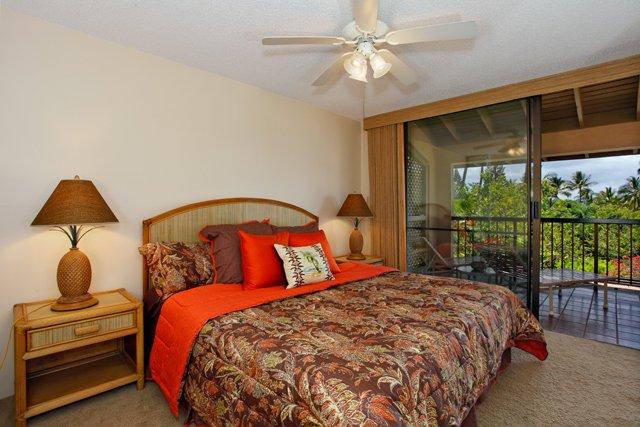
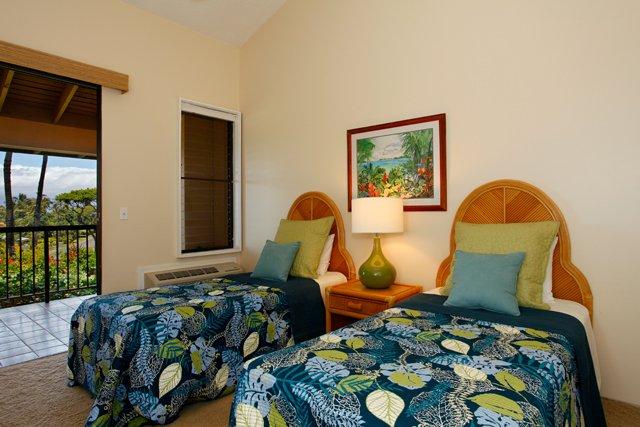
SUGAR COVE!!

INCREDIBLE

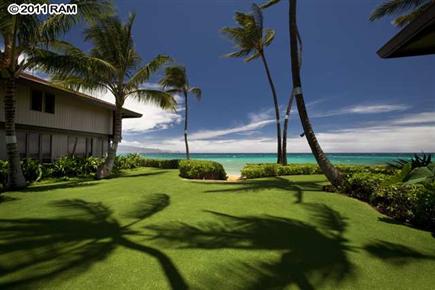
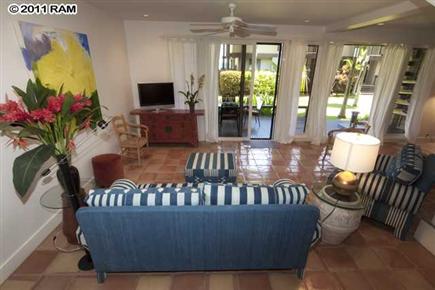
A rarely ever on the market Sugar Cove just popped up.  Big price $2.995M.  It’s a 3 bd/2ba  First time in a long time we’ve seen one of these go for sale!

This property listed by Maui Real Estate Team.  The Hansens May Represent You as a Buyer’s Representative.  Please call Bob Hansen, BROKER, 808-283-9456 or Donna D. Hansen, Realtor (S) 808-280-1650 to arrange an appointment.

Interesting Article On The Importance Of Getting To Know Your "Neighborhood"

7 neighborhood threats to your home’s value

Who — or what — is next door can affect how much people will pay for your home.

By Brian O’Connell of MainStreet
Article from:www.msn.com

Bad neighbors can be a serious problem, according to the Appraisal Institute. An unkempt yard, proximity to a sex offender or having certain commercial facilities nearby, such as a power plant or funeral home, can reduce the value of surrounding homes by as much as 15%.

“The impact can vary tremendously, depending on a few factors: how ‘bad’ the bad neighbor is, the kind of neighborhood you’re located in and the type of market that exists,” says Carlos Gobel, director of residential services at Integra Realty Resources in Miami.

But what exactly is a “bad” neighbor? Definitions vary, but real-estate professionals say it boils down to any home or business that turns people off.

“A bad neighbor is one that has no consideration for the rest of the community,” says Mindy Pordes, co-founder of Pordes Residential Sales & Marketing in Aventura, Fla. “For example, someone who doesn’t take care of the outside appearance of the home, such as the gardening, painting of the outside of the home, roof, garbage and general upkeep. In addition, a bad neighbor may have constant visitors taking up parking spaces, perhaps on the street, loud house parties, dogs that bark all night or stray cats lingering around.”

What’s your home worth?
A “bad” neighbor can also be a business or government enterprise whose very existence drives down the value of your property. Here are seven surprising neighbors that can reduce your home’s value:

Power plants. The data are fairly clear on the impact of a power plant on nearby home values — it usually hurts them. A study (PDF) from the University of California at Berkeley shows that home values within two miles of a power plant can be decreased between 4% and 7%.

Landfills. A study (PDF) from the Pima County, Ariz., assessor’s office shows that a subdivision near a landfill loses 6% to 10% in value compared with a subdivision that isn’t near a landfill — all other residential factors being equal, including house size, school quality and residential incomes.

Robert A. Simons, an urban planning professor at Cleveland State University, says that if you live within two miles of a Superfund site — a landfill that the government designates as a hazardous-waste site — your home’s value could decline by up to 15%.

Sex offenders. Living near a registered sex offender is one of the biggest downward drivers of home values. Researchers at Longwood University in Farmville, Va., concluded that the closer you live to a sex offender, the more your home will depreciate. In the paper, “Estimating the Effect of Crime Risk on Property Values and Time on Market: Evidence from Megan’s Law in Virginia,” Longwood researchers say, “The presence of a registered sex offender living within one-tenth of a mile reduces home values by about 9%, and these same homes take as much as 10% longer to sell than homes not located near registered sex offenders.”

Delinquent bill payers. One surprising way neighbors can bring down the value of surrounding homes, especially in town home or condo communities, is by not paying their maintenance fees or mortgages. “Bad neighbors bring values down by not paying their maintenance fees, in some cases their mortgage payments, and not maintaining the home’s appearance,” Pordes says. “These homeowners usually do not care about real-estate values.”

Foreclosed homes. Perhaps the biggest single factor that drives nearby home values down is a foreclosure. A recent study by the Massachusetts Institute of Technology concludes that the value of homes within 250 feet of a foreclosed property will decrease by 1% per foreclosure, on average. Federal Reserve Governor Joseph Tracy said recently in his economic outlook for 2011: “The growing inventory of defaulted mortgages continues to weigh down any recovery in the housing market … Problems in housing markets can impact economic growth.”

Lackluster landscaping. Studies show that lawn care has a big impact on surrounding home values. Virginia Tech University released a report stating that pristine landscaping can jack up the value of a home by 5% to 11%.

Closed schools. Sometimes, neighborhood problems can stem from local government action. For example, if a cash-strapped city or town closes a neighborhood school, that can easily steer home values south. The National Association of Realtors says 75% of home shoppers say the quality and availability of schools in the neighborhood is either “somewhat important” or “very important.”

So can you fight back against problem neighbors? In the case of a landfill, power plant or sex offender, your options are severely limited. As long as your neighbors are following the letter of the law, you’ll just have to grin and bear it — or move. If not, you have every right to petition your local government authorities for a grievance and at least get the matter reviewed.

If it’s a residential property causing the problem, however, you might have better options.

For starters, you can leave a polite letter in the offending homeowner’s mailbox to get his attention. In addition, Pordes says that if the home is within a homeowners association or condo association, the association can send letters to the homeowner and deny him community privileges to encourage him to comply with the community rules and maintain home values.

Most cities and towns have ordinances against messy yards and junk-laden driveways, so check your community’s rules and regulations to see what applies.

Unfortunately, many cities and towns also have landfills, power plants and other less-than-desirable commercial-sized neighbors.

Most likely, you’re just going to have to live with them.

By Brian O’Connell of MainStreet
Article from:www.msn.com

Interesting Article For Buyers Considering Purchasing A Foreclosed Property

This article was reported by Holden Lewis for Bankrate.com.

Is it safe to buy a foreclosure?

At first, bank-owned houses seemed like some of the best bargains in town, but then the robo-signing controversy made buying seem like a risky proposition.

It’s safe to buy a previously foreclosed-upon house if title insurance is available on it, experts say.

The “robo-signing” scandal — in which banks and law firms cut corners on foreclosure paperwork — caused some lenders to suspend foreclosures this fall while they reviewed their procedures.

What would happen to the buyer of a foreclosed house if the home previously had been wrongly repossessed?

As long as the new lender and new owner have title insurance, the former owner can’t seize the home back.

The new owner will keep the house, and the displaced former owner might be compensated with money.

“To the extent that a borrower who was foreclosed upon has recourse, it’s against the foreclosing lender, and they can seek monetary damages. But the property’s gone,” says Mark Skilling, the chief operating officer and general counsel for ForeclosureRadar, an online foreclosure data marketplace.

“The current owner who got title insurance — they get to keep the property. They’re a good-faith purchaser,” Skilling says.

That’s welcome news for homebuyers who rummage through the bargain bin of foreclosed houses.

Few consumers buy houses at foreclosure auctions. More commonly, consumers buy foreclosed properties from the banks that seized them.

The term for such houses is REO, for real-estate owned by a bank. Some real-estate agents specialize in selling REO properties.

A good share of REO houses are decrepit. Many sit empty for months before they are sold, and they end up in such bad shape that they are ineligible for mortgages. Investors often buy these REOs with cash, fix them up and sell them, just like the house flippers of the boom years.

Whether bought from the bank or from a flipper, almost all REOs are listed through real-estate agents.

Armando Montelongo, the former host of “Flip This House” on the A & E network, says certain phrases in the listing — such as “completely rehabbed” or “newly remodeled” — are signs that the dwelling was a foreclosure and is now in good-enough shape to be eligible for a home loan.

“It’s the benefit of buying an REO from somebody who flips properties, versus buying an REO straight from the bank,” says Montelongo, who lives in San Antonio.

Properties with a past:
However the foreclosed house ends up in a buyer’s hands, issues that lurk in the property’s past could “cloud title” — cast uncertainty on the buyer’s ownership rights. Title insurance protects against such defects in the title, such as undiscovered liens, forged signatures or defects in documentation.

There are two types of title policies. Lenders policies protect lenders, and owners policies protect owners. A mortgage lender always requires a lender’s title policy.

Owners policies are optional and are recommended for properties that have been through foreclosure.

“From the consumer’s perspective, I don’t think they have a lot to fear as long as they’re able to purchase title insurance on an REO property,” says Ivan Choi, national default sales executive for New Vista Asset Management in San Diego. “By and large, the title companies are still out offering policies.

There have been reports that title insurers have refused to issue policies on some homes foreclosed by lenders involved in the robo-signing scandal. Responding to these reports, Fidelity National Financial — the largest mortgage insurance company — issued a statement that “this situation will not have a material adverse impact on its title business.”

The statement said “new owners and their lenders would have the rights of good-faith purchasers which should not be affected by potential defects in documentation.”

Those “good-faith purchasers” won’t be kicked out of their houses, Skilling says. He adds that Fidelity’s message is that “they’re still going to underwrite on REO properties.”

This article was reported by Holden Lewis for Bankrate.com.

Listing in Wailea Ekahi II

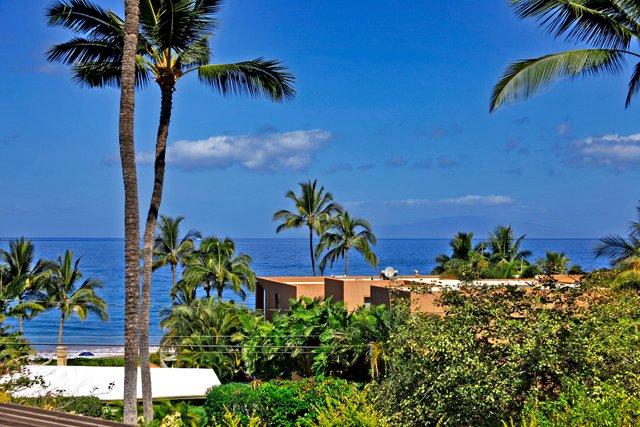
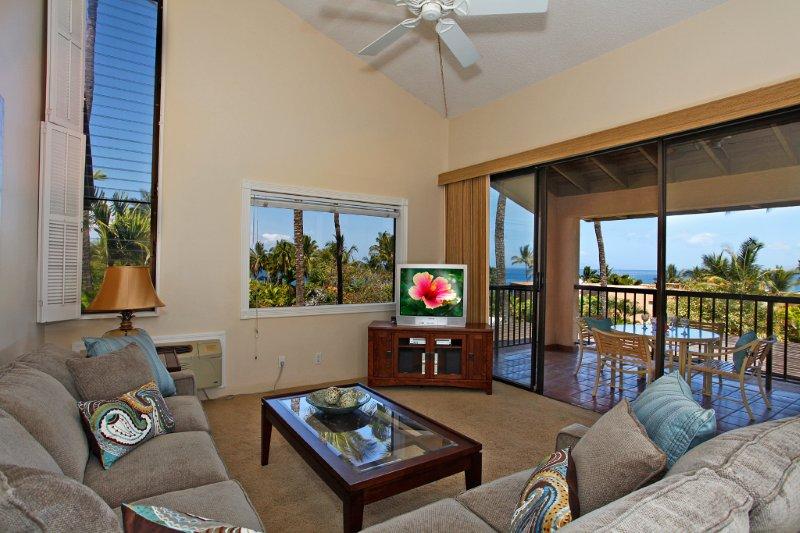
Awesome condo with fantastic ocean views is just steps to world renown Keawakapu Beach as seen in beach photo. This magnificent two bedroom two bath top floor unit is perfectly located to enjoy great views and fantastic beach and pool time.
The pool pavillion is nicely appointed so you can sit and enjoy the ocean, sun or shade, and simply enjoy Maui’s beauty. This lovely unit is fully furnished vacation rental has a wonderful kitchen with granite countertops.   Wailea Ekahi is known for great facilities including ocean front pool pavilion and is close to all Wailea amenities including tennis, golf, 5 star dining and The Shops at Wailea.

Hawaii's Jobless Rates Drops To The Lowest Level In Nearly 2.5 Years

Isles’ unemployment rate drops to 6 percent in May

The rate is the lowest since 2009 and comes as businesses restart their hiring

By Kristen Consillio
Article from: Star-Advertiser

More Hawaii residents were employed in May, the state Department of Labor and Industrial Relations said Wednesday, bringing the jobless rate to the lowest level in nearly 21⁄2 years.

Hawaii’s seasonally adjusted unemployment rate was 6 percent last month — matching the January 2009 rate — and down from 6.1 percent in April.

The rate had been stalled at 6.3 percent for four months before that and was as high as 7 percent from mid-2009 through the end of 2009 during the economic downturn, according to data from the U.S. Bureau of Labor Statistics.

The steady drop indicates greater confidence in the general economy as businesses resume expansion plans shelved during the recession. Increased economic activity is expected to boost job growth by 1.8 percent, or 10,700 positions, this year, the state Department of Business, Economic Development & Tourism said last month.

“As we’re seeing IT (information technology) budgets opening up and as we see companies moving forward with initiatives they put on hold, that is in turn driving business for us,” said Jeremy Amen, chief executive officer of Wavecom Solutions Corp., a technology and communications firm that plans to increase its 75-employee work force this year.

McDonald’s of Hawaii hired more than 400 people in May, after receiving more than 4,000 applications to fill about 1,000 positions by year’s end, said Melanie Okazaki, marketing manager.

“New customers are coming more often. Because of that we’re growing our business and because of that we have opportunities for people who are looking for jobs,” she said. “We’re optimistic about our business. This is the first time we had a concerted effort regarding hiring efforts.”

The Walt Disney Co. also increased hiring efforts last month in an attempt to enlist most of the 800 workers needed for its Aulani Resort in West Oahu opening Aug. 29.

“We’re happy that the timing of Aulani is proving to be helpful to the state’s employment numbers,” said Todd Apo, the resort’s director of public affairs.

The state labor department said there were 597,000 employed and 38,100 unemployed in May, for a total seasonally adjusted work force of 635,100. 8.2 percent.

Nationally, the seasonally adjusted unemployment rate increased to 9.1 percent in May from 9 percent in April.

Surf Paws Animal Hospital, which opened last month in Hawaii Kai and hired half a dozen workers, plans to double its work force by year’s end as confidence in the economy continues to improve.

“I’ve seen a lot more businesses opening around the time we were opening,” said part-owner Joem Costes.