Interesting Article For Buyers Considering Purchasing A Foreclosed Property

This article was reported by Holden Lewis for Bankrate.com.

Is it safe to buy a foreclosure?

At first, bank-owned houses seemed like some of the best bargains in town, but then the robo-signing controversy made buying seem like a risky proposition.

It’s safe to buy a previously foreclosed-upon house if title insurance is available on it, experts say.

The “robo-signing” scandal — in which banks and law firms cut corners on foreclosure paperwork — caused some lenders to suspend foreclosures this fall while they reviewed their procedures.

What would happen to the buyer of a foreclosed house if the home previously had been wrongly repossessed?

As long as the new lender and new owner have title insurance, the former owner can’t seize the home back.

The new owner will keep the house, and the displaced former owner might be compensated with money.

“To the extent that a borrower who was foreclosed upon has recourse, it’s against the foreclosing lender, and they can seek monetary damages. But the property’s gone,” says Mark Skilling, the chief operating officer and general counsel for ForeclosureRadar, an online foreclosure data marketplace.

“The current owner who got title insurance — they get to keep the property. They’re a good-faith purchaser,” Skilling says.

That’s welcome news for homebuyers who rummage through the bargain bin of foreclosed houses.

Few consumers buy houses at foreclosure auctions. More commonly, consumers buy foreclosed properties from the banks that seized them.

The term for such houses is REO, for real-estate owned by a bank. Some real-estate agents specialize in selling REO properties.

A good share of REO houses are decrepit. Many sit empty for months before they are sold, and they end up in such bad shape that they are ineligible for mortgages. Investors often buy these REOs with cash, fix them up and sell them, just like the house flippers of the boom years.

Whether bought from the bank or from a flipper, almost all REOs are listed through real-estate agents.

Armando Montelongo, the former host of “Flip This House” on the A & E network, says certain phrases in the listing — such as “completely rehabbed” or “newly remodeled” — are signs that the dwelling was a foreclosure and is now in good-enough shape to be eligible for a home loan.

“It’s the benefit of buying an REO from somebody who flips properties, versus buying an REO straight from the bank,” says Montelongo, who lives in San Antonio.

Properties with a past:
However the foreclosed house ends up in a buyer’s hands, issues that lurk in the property’s past could “cloud title” — cast uncertainty on the buyer’s ownership rights. Title insurance protects against such defects in the title, such as undiscovered liens, forged signatures or defects in documentation.

There are two types of title policies. Lenders policies protect lenders, and owners policies protect owners. A mortgage lender always requires a lender’s title policy.

Owners policies are optional and are recommended for properties that have been through foreclosure.

“From the consumer’s perspective, I don’t think they have a lot to fear as long as they’re able to purchase title insurance on an REO property,” says Ivan Choi, national default sales executive for New Vista Asset Management in San Diego. “By and large, the title companies are still out offering policies.

There have been reports that title insurers have refused to issue policies on some homes foreclosed by lenders involved in the robo-signing scandal. Responding to these reports, Fidelity National Financial — the largest mortgage insurance company — issued a statement that “this situation will not have a material adverse impact on its title business.”

The statement said “new owners and their lenders would have the rights of good-faith purchasers which should not be affected by potential defects in documentation.”

Those “good-faith purchasers” won’t be kicked out of their houses, Skilling says. He adds that Fidelity’s message is that “they’re still going to underwrite on REO properties.”

This article was reported by Holden Lewis for Bankrate.com.

Listing in Wailea Ekahi II

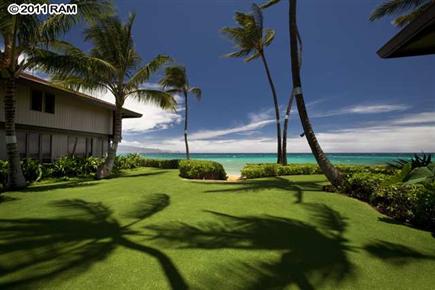
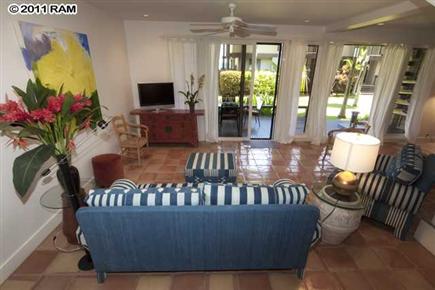
Awesome condo with fantastic ocean views is just steps to world renown Keawakapu Beach as seen in beach photo. This magnificent two bedroom two bath top floor unit is perfectly located to enjoy great views and fantastic beach and pool time.
The pool pavillion is nicely appointed so you can sit and enjoy the ocean, sun or shade, and simply enjoy Maui’s beauty. This lovely unit is fully furnished vacation rental has a wonderful kitchen with granite countertops.   Wailea Ekahi is known for great facilities including ocean front pool pavilion and is close to all Wailea amenities including tennis, golf, 5 star dining and The Shops at Wailea.

Hawaii's Jobless Rates Drops To The Lowest Level In Nearly 2.5 Years

Isles’ unemployment rate drops to 6 percent in May

The rate is the lowest since 2009 and comes as businesses restart their hiring

By Kristen Consillio
Article from: Star-Advertiser

More Hawaii residents were employed in May, the state Department of Labor and Industrial Relations said Wednesday, bringing the jobless rate to the lowest level in nearly 21⁄2 years.

Hawaii’s seasonally adjusted unemployment rate was 6 percent last month — matching the January 2009 rate — and down from 6.1 percent in April.

The rate had been stalled at 6.3 percent for four months before that and was as high as 7 percent from mid-2009 through the end of 2009 during the economic downturn, according to data from the U.S. Bureau of Labor Statistics.

The steady drop indicates greater confidence in the general economy as businesses resume expansion plans shelved during the recession. Increased economic activity is expected to boost job growth by 1.8 percent, or 10,700 positions, this year, the state Department of Business, Economic Development & Tourism said last month.

“As we’re seeing IT (information technology) budgets opening up and as we see companies moving forward with initiatives they put on hold, that is in turn driving business for us,” said Jeremy Amen, chief executive officer of Wavecom Solutions Corp., a technology and communications firm that plans to increase its 75-employee work force this year.

McDonald’s of Hawaii hired more than 400 people in May, after receiving more than 4,000 applications to fill about 1,000 positions by year’s end, said Melanie Okazaki, marketing manager.

“New customers are coming more often. Because of that we’re growing our business and because of that we have opportunities for people who are looking for jobs,” she said. “We’re optimistic about our business. This is the first time we had a concerted effort regarding hiring efforts.”

The Walt Disney Co. also increased hiring efforts last month in an attempt to enlist most of the 800 workers needed for its Aulani Resort in West Oahu opening Aug. 29.

“We’re happy that the timing of Aulani is proving to be helpful to the state’s employment numbers,” said Todd Apo, the resort’s director of public affairs.

The state labor department said there were 597,000 employed and 38,100 unemployed in May, for a total seasonally adjusted work force of 635,100. 8.2 percent.

Nationally, the seasonally adjusted unemployment rate increased to 9.1 percent in May from 9 percent in April.

Surf Paws Animal Hospital, which opened last month in Hawaii Kai and hired half a dozen workers, plans to double its work force by year’s end as confidence in the economy continues to improve.

“I’ve seen a lot more businesses opening around the time we were opening,” said part-owner Joem Costes.

Fannie Mae To Cancel Any Pending Nonjudicial Hawaii Foreclosures and Restart Them in Court

Foreclosures might swamp isle courts

Fannie Mae eschews a quicker, nonjudicial process in response to a new Hawaii law

By Andrew Gomes
Article from: Star-Advertiser

One of the nation’s biggest owners of home mortgages has made a move that could add to an already overburdened Hawaii court system’s caseload.

Fannie Mae, a publicly owned company created and overseen by the federal government, recently instructed companies that handle foreclosures for its loans to file all new Hawaii foreclosures in court.

Fannie Mae also told the firms known as loan servicers to cancel any pending nonjudicial Hawaii foreclosures and restart them in court.

Fannie Mae took the steps in response to Hawaii’s new foreclosure law enacted last month. Critics are concerned Fannie Mae might be attempting to sidestep the main intent of the law, which was to engage mediators to help homeowners avoid foreclosure.

The vast majority of residential foreclosures in Hawaii in recent years have been conducted out of court through a nonjudicial process because it was quicker and cheaper than going through court.

The law was changed in part because the nonjudicial foreclosures left borrowers with little opportunity to contest repossessions even in cases where they believed a lender was improperly taking their home.

The new law, Act 48, gives qualified owner-occupants of Hawaii homes the option of having a dispute resolution professional assist with foreclosure mitigation in front of a lender representative before a foreclosure sale can proceed.

Fannie Mae’s directive, issued Friday, drew criticism from a local homeowner advocacy group that lobbied for Hawaii’s new law.

The Rev. Bob Nakata, a member of Faith Action for Community Equity, said Fannie Mae is attempting to bypass the new law. “Just two days ago, 25 churches got together from two islands and celebrated our new foreclosure mediation law, and now Fannie Mae is trying to outmaneuver us,” he said. “It stinks. Our government-sponsored enterprises are supposed to help us, not take away everything we have fought for.”

Some supporters of Hawaii’s new law fear the move by Fannie Mae, which buys U.S. single-family home loans from loan originators, could spur similar moves by giant banks and other big holders of Hawaii home mortgages, shunting aside the revamped nonjudicial foreclosure law and overwhelming the state court system.

Fannie Mae declined to say whether it established its new policy to avoid nonjudicial foreclosures in Hawaii under the new law or whether the policy is only temporary until it’s possible to file new nonjudicial foreclosures.

The new law resulted in a de facto moratorium on nonjudicial foreclosures because the state Department of Commerce and Consumer Affairs won’t accept any new nonjudicial foreclosure filings until the mediation program is running. The law also prohibits any nonjudicial foreclosure auctions until borrowers have an opportunity to participate in the program.

The program is expected to be running by Oct. 1.

Fannie Mae spokeswoman Amy Bonitatibus said policies are regularly reviewed and adjusted as needed.

“Our announcement is consistent with Hawaii law and was made in response to recent Hawaii legislation,” she said. “Currently, nonjudicial foreclosures cannot be pursued in Hawaii. There is not currently an end date listed in the announcement we issued, but again, we regularly make updates and changes to reflect the current law and foreclosure processes in a state.”

Kim Harman, Hawaii policy director for Faith Action for Community Equity, questioned whether Fannie Mae is trying to avoid requirements for documenting original and amended mortgage agreements and promissory notes under the new law.

Harman said the documentation requirement is the only substantial difference between Hawaii’s law and a Nevada foreclosure mitigation law upon which Hawaii’s law was modeled. Fannie Mae hasn’t banned nonjudicial foreclosures in Nevada.

State Rep. Bob Herkes, who along with Sen. Rosalyn Baker was a chief architect of the law, said Fannie Mae would be misguided if it intends to avoid better documentation by running foreclosures through Hawaii courts.

Herkes intends to ask the Judiciary to hold mortgage holders to the same documentation standards contained in the nonjudicial foreclosure law.

Some Hawaii foreclosure industry attorneys had warned that lenders might flock to judicial foreclosures, in part because lenders can pursue borrowers for any difference between what a borrower owes and proceeds from selling a foreclosed home. This difference, referred to as a deficiency judgment, could help offset higher expenses of judicial foreclosure.

However, others believe the extra time and expense of judicial foreclosure, especially if Hawaii courts get bogged down, still make judicial foreclosure less attractive than the revamped nonjudicial foreclosure process.

While Fannie Mae seeks to proceed with Hawaii foreclosures in court, it is also offering financial incentives for loan servicers to avoid foreclosure and was instructed by the Federal Housing Finance Agency in April to not start a foreclosure if a borrower and servicer are engaged in a good-faith effort to resolve a mortgage delinquency.

So far, there has not been a huge increase in judicial foreclosures in Hawaii, considering that the new law went into effect May 5.

For all of May, there were 141 judicial foreclosure cases, up from 119 in May 2010, according to Judiciary figures. Nearly all of the increase occurred on the Big Island.

For all of last year, state Circuit Courts handled 1,331 foreclosure cases. That figure is estimated to be around 10 percent of all Hawaii foreclosures.

The Judiciary, in testimony on Senate Bill 651 that became the foreclosure mitigation law, expressed concern that any big increase in judicial foreclosures could dramatically delay cases unless new judges and staff are hired.

According to real estate research firm RealtyTrac, close to 500 new foreclosure cases a month were filed on average this year through April.

The Judiciary estimated it would cost about $4.3 million a year for additional personnel to handle such an increase.

Shannon Rowe and His Team Take Another Win!!

Maui High School students took second place at the 2011 Ford/AAA Student Auto Skills National Finals Tuesday morning.

The competition is designed to find the best automotive technology students across the U.S.

The student team from Oregon won first place.

Maui High’s graduates Jimbo Paranada and Marc Paguirigan took 62 minutes and 42 seconds to repair their deliberately bugged Ford F-150 XLT 4×4 Super Cab at Ford Motor Company world headquarters. The Hawaii student team, and the Oregon student team, submitted “perfect trucks” to judges which contained no repair work demerits.  But Oregon’s faster hands-on finish of 58 minutes and six seconds pushed them over the top to win the competition. 

The Maui students were coached by Maui High Instructor Shannon Rowe, a former Hawaii state champion of the Ford/AAA competition, who also was a second-place finisher at the national finals in 1996.  This was his third trip to the national finals as an instructor.

The annual competition gives auto tech students the opportunity to showcase their automotive problem-solving capabilities by resolving “real world” vehicle repair challenges in a timed, head-to-head match-up of top teams from 50 states. 

Kahului-based Maui High teams have represented the state at the national finals for at least 16 years, almost annually since 1992.  They’ve placed in the top 10 for 10 years and won national titles in 1995 and 2000. Last year’s team placed ninth. 

More than 10,000 high school juniors and seniors competed in this year’s competition with $12 million in scholarships offered.  The second-place Hawaii team received thousands of dollars in scholarships to pursue their automotive education, along with assorted prizes and trophies.

As one of the top-10 finishing schools, Maui High School will receive an engine from Ford for their automotive technology program to use in training.  The student pair also will receive a trophy for their school.