Maui Hotel Occupany Rose 6.5 Percentage Points in March ~ Average Daily Rate Rose About 15%

Hotel numbers look good despite Japan lag

Japanese arrivals to Hawaii declined after the March quake and tsunami

By Allison Schaefers
Article from: Star-Advertiser
All measures of Hawaii hotel performance increased in March, despite a strong downturn from Japanese visitors after the March 11 earthquake and tsunami.

Statewide hotel occupancy increased 4.8 percentage points to 75.2 percent, according to a report released today by hotel consultancy Hospitality Advisors LLC.

The increase would have been larger if not for the tragedy in Japan. Japanese visitor arrivals to Hawaii were down 18.7 percent in March. The drop was felt most at Oahu hotels, since Waikiki is the primary destination for Japanese visitors.

“Occupancy at Oahu’s hotels had been exceeding 2010 levels up until March 11,” said Joseph Toy, president of Hospitality Advisors. “In the aftermath of the events in Japan, Oahu’s daily occupancies trailed the previous year’s levels during most of the remaining days in March.”

Even with the decline in the last half of March, Oahu’s hotel occupancy grew by 3.4 percentage points to 79.2 percent, the highest occupancy in the isles.

On Maui, occupancy rose 6.5 percentage points to 78.7 percent. Big Island occupancy climbed 5.9 percentage points to 63.4 percent. Kauai’s occupancy rose 6.1 percentage points to 62.2 percent.

Jack Richards, president and chief executive of Pleasant Holidays LLC, the state’s largest wholesaler, said the booking pace for vacation packages that included Hawaii hotel stays was very strong until March 11.

“Bookings slowed for the remainder of March and began increasing in early April,” Richards said.

More visitors from the U.S. West, U.S. East and Canada helped offset the drop in Japanese arrivals and keep room rates moving higher.

The statewide average daily rate (ADR) paid for a hotel room increased more than 9 percent in March to $190.15. Revenue per available room (RevPAR), considered by many to be the best measure of hotel performance, was up nearly 17 percent to $142.99.

The state did well in the first quarter despite the Japanese decline in March.

For the first quarter, Hawaii’s $147.05 RevPAR was the highest in the nation. Hawaii’s 77 percent hotel occupancy during the first quarter was the second highest in the nation behind Miami, and the state’s $190.99 average daily rate trailed only New York.

David Kong, president and chief executive of Best Western International, which operates two hotels in Honolulu and one on Maui, said the brand’s Hawaii hotels are doing well this year.

“The two here on Honolulu are both up tremendously this year,” Kong said. Hawaii will continue to be a sought-after destination, he said. “The aloha spirit is the most important element of Hawaii’s success,” Kong said. “It’s very difficult for any other destination to duplicate.”

With occupancy improving, hotels are able to charge more for rooms.

The average daily rate on Oahu was $156.42, an increase of more than 9 percent from the previous year. Likewise, RevPAR increased about 14 percent to $123.88 from $108.76 a year ago.

On Maui the average daily rate rose about 15 percent to $265.94, and RevPAR increased about 25 percent to $209.29. Kauai ADR increased more than 7 percent to $201.18, and RevPAR grew about 19 percent to $125.13.

Big Island RevPAR rose about 4 percent to $109.11; however, ADR fell by about 6 percent to $172.09. The tsunami-related closures of the Kona Village Resort and the Four Seasons Hualalai, which just reopened, on the Big Island likely contributed to the decrease in ADR.
Hawaii Bankruptcy Filings Continue To Drop ~ First Four Months of 2011 Have Shown A 6% Decline

Isle bankruptcies continue to drop

The first four months of 2011 have shown a 6 percent decline, a sign of stabilization

By Alan Yonan Jr.
Article from: Star-Advertiser
The number of bankruptcy cases filed in Hawaii fell in April for the fourth time in five months, setting the stage for what could be the first yearly decline in bankruptcy filings since 2006.

U.S. Bankruptcy Court said 342 cases were filed in April, 12.5 percent fewer than the 391 cases filed the same month a year earlier. With the exception of a scant 0.3 percent increase in March, bankruptcy filings have declined on a year-over-year basis in every month since December.

With bankruptcy filings still averaging more than 300 a month, however, there are still a considerable number of Hawaii residents and businesses trying to dig themselves out of debt accumulated during the recession that officially ended in the summer of 2009.

Still, the gradual reduction in filings shows that “things are definitely stabilizing at a minimum,” said David Farmer, one of three federal bankruptcy court trustees operating in the District of Hawaii.

An improving economy appears to be having a positive impact on household finances, he said. “It’s premature to say we are out of the woods, but the trend is going in the right direction,” Farmer said.

Bankruptcy filings through the first four months of 2011 are running 6 percent behind the year-ago pace, making a decline for the entire year a distinct possibility.

“It may not be a huge decline, but we have a good shot at it,” Farmer said.

The bankruptcy court figures show that Oahu had the biggest decline in April cases, dropping to 203 from 250 the same month a year ago. The number of cases filed on Maui fell to 69 cases from 70, while filings on Kauai fell to 23 in April from 24 a year earlier. Big Island filings were unchanged at 47.

Hotel Hana-Maui to be Renamed Travaasa Hana in June and Will Feature All-Inclusive Rates

Hotel Hana-Maui becomes Travaasa Hana in June

The property will also feature all-inclusive rates that cover lodging and food

By Star-Advertiser staff
Article from: Star-Advertiser

The owner of the Hotel Hana-Maui is renaming the property and changing to an all-inclusive pricing model that covers accommodations, meals, spa services and activities for its guests.

Starting in June, the hotel will be known as the Tra­vaasa Hana, one of two “Tra­vaasa Destination” properties operated by Denver-based Green Tea LLC. The other hotel is the Tra­vaasa Austin, which opened April 14 near Austin, Texas.

Green Tea, a unit of privately held Amstar Group, said it plans to add additional properties to the Tra­vaasa brand in “desirable ocean, desert, rainforest and mountain locales.”

Amstar Group, a real estate investment and development company, bought the Hotel Hana-Maui a year ago, becoming the third owner of the hotel in a year and a half.

All-inclusive rates at Tra­vaasa Hana will start at $595 per person. Under the current pricing structure, room rates start at $325 for double occupancy. The 70-room hotel is on 69 acres along the East Maui coastline, with accommodations in bungalows and cottages.

Amstar bought the hotel in April 2010 from the Ohana Hotel Co. LLC. Ohana had acquired the property in 2009 from California-based Passport Resorts. Passport had owned the hotel since 2001.

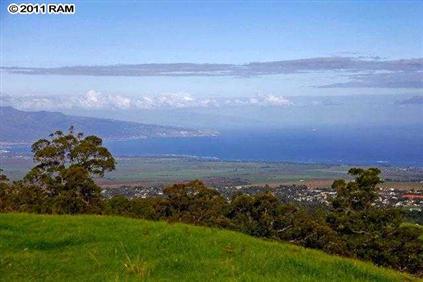
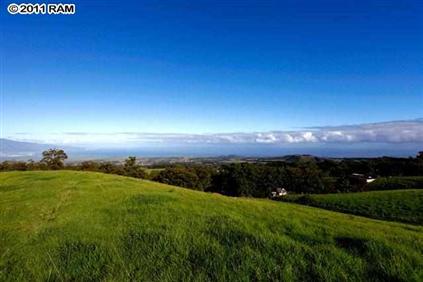
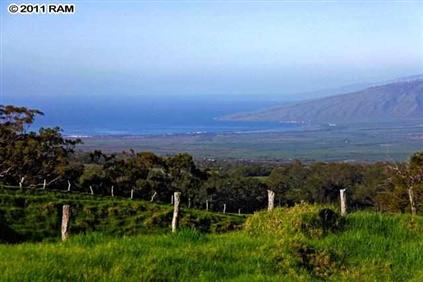
Fabulous Views in Olinda

Awww… Olinda

This is a huge, heritage property in prestigious Olinda. The land boasts the most fabulous ocean and three island view with ultimate privacy and beauty. The land is currently assessed as cattle grazing land but the county assessor say that the true value is about $4,480,000.

There are two building sites that sit on a knoll with panoramic views. One important factor is that it has a county water meter. This property must be seen to fully appreciate.

Contact Bob Hansen, BROKER, 808-283-9456 or

Donna D. Hansen, Realtor (S) 808-280-1650

Higher Demand, Improved Buyer Confidence & Prices Help Drive Rebound In Resort Home Sales

Lower prices drive rebound in resort home sales

Higher demand and improved buyer confidence also helped the boost

By Andrew Gomes
Article from: Star-Advertiser
Buyer demand for Hawaii homes broadly rebounded last year, and a new report shows that the same was true for one segment of the state’s housing market: resort residences.

Sales of condominiums and single-family homes — new and previously owned — as well as house lots at master-planned resorts such as Wailea on Maui, Mauna Lani on Hawaii island and Princeville on Kauai ended a four-year slide with a 42 percent surge to 1,473 properties last year from 1,040 the year before.

The surge was in line with home sale increases for all homes on the neighbor islands, where gains last year ranged roughly from 20 percent to 60 percent. Most resort home sales were on the neighbor islands as opposed to Oahu, where the rebound for all home sales last year was closer to 10 percent.

The report by local market researcher Ricky Cassiday of Data@Work said the rebound in resort home sales was aided by improved confidence among buyers and the slow economic recovery, though the big driver appeared to be lower prices.

“No way around it,” Cassiday said in the report. “This strong rebound in activity is thanks to dramatically falling prices.”

The average sale price was $1.1 million last year, down 14 percent from nearly $1.3 million the year before.

Cassiday’s report said the average peaked in 2008 at nearly $1.6 million, which put the cumulative decline since then at 29 percent.

It’s uncertain whether prices will rebound this year. The 2009-10 price decline was a record. The previous record drop for resort home average prices in Hawaii occurred in a single year, 1977, when the average fell 27 percent, according to Cassiday.

Cassiday said Hawaii’s resort home market this year likely will either see prices stabilize, which could slow sales, or further price drops that would help sales continue rising. He said he’s betting more on prices rising slightly.

Last year, many resort home sellers were dropping prices. In other cases, lenders were pricing property attractively after foreclosure.

Cassiday’s report said 9 percent of resort home sales last year were foreclosures that sold for an average $737,343 compared with an average $1.35 million for nonforeclosure resort home sales. A report by RealtyTrac released earlier this year said 11 percent of all home sales in Hawaii were foreclosures last year.

Another factor in the average price decline has been developers cutting back on building high-end homes amid the economic downturn.

Developers sold 371 new resort homes last year, an 11 percent decline from the year before, the report said.

The divergence helped pull down the average sale price for all resort homes last year, as the average new home sold for $1.5 million compared with $971,277 for the average previously owned home.

Cassiday expects developers will have a smaller share of resort home sales this year if buyer demand grows ahead of home production by cautious developers slowly resuming construction.

In some cases, developers are offering incentives to spur sales.

Earlier this year, Castle & Cooke tried auctioning all its unsold inventory of resort property on Lanai. The company offered 11 homes and three lots, and ended up selling five condos at Manele Resort for close to $1.2 million each on average, or about 80 percent of the price for the most recent previous sale at Manele last year.

Last month, Brookfield Homes Hawaii publicized efforts to sell three golf course homes in its KaMilo subdivision at Mauna Lani with prices starting at $799,000. Last week, Brookfield announced an incentive of up to $50,000 in free designer furnishings for buying select KaMilo homes before May 15.

According to Cassiday’s report, there were 386 sales last year at the least expensive end of the market, between $250,000 and $499,000. At the high end, there were 358 sales for properties of more than $1 million.

Near the height of the market in 2006 and 2007, there were about 150 sales under $500,000 in each year compared with about 800 sales over $1 million.

$1.1 million. The Valley Island has held the top spot since at least 2006. The average on the Big Island was $704,328, followed by $465,369 on Oahu and $428,690 on Kauai.

Maui also had the most sales at 562. Hawaii island was next at 401, followed by Kauai at 345 and Oahu at 162.